
How to choose a custom surfboard
A useful custom-board conversation starts with your surfing. Exact dimensions can come later.
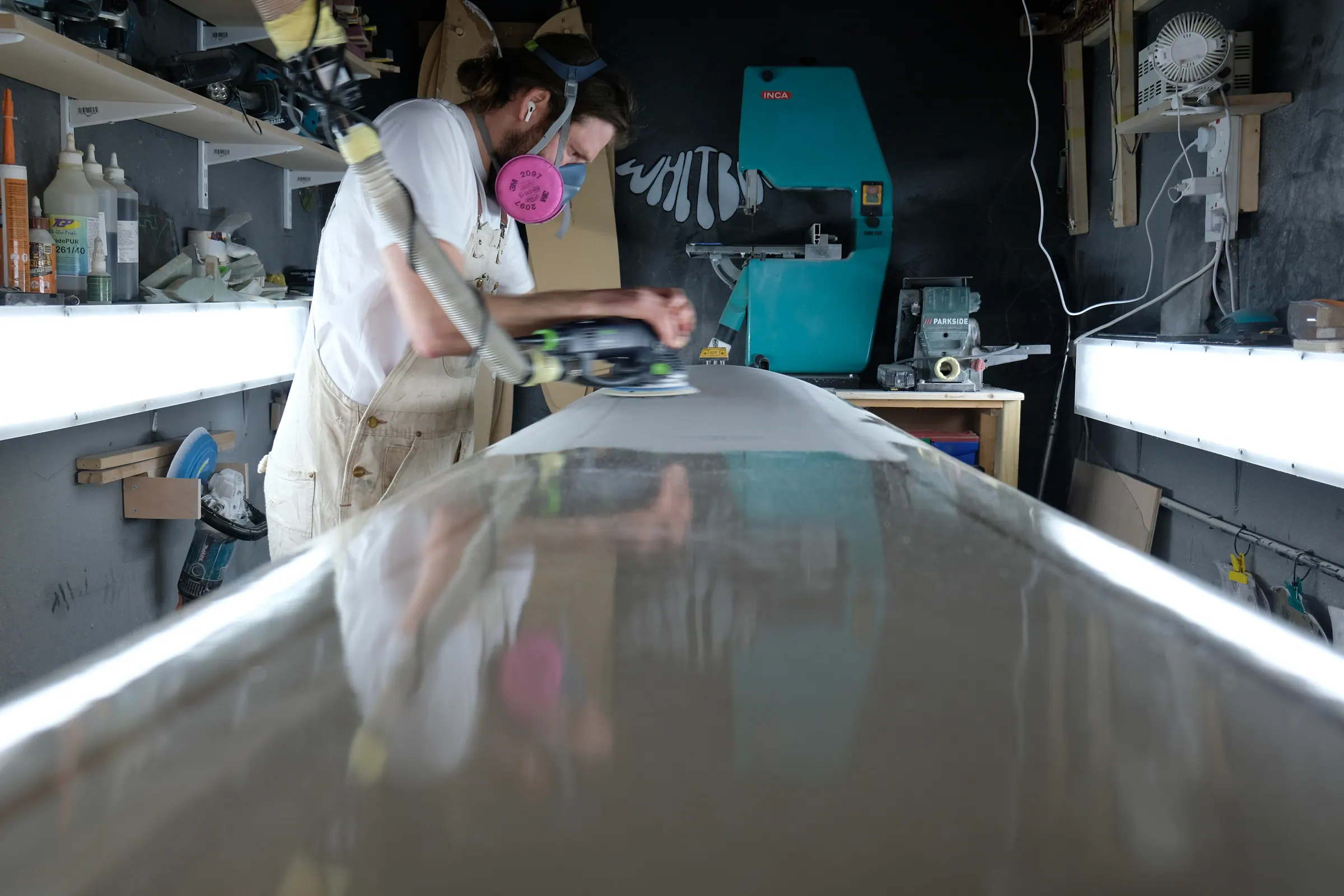
Start with the change you want
A custom board makes most sense when it has a clear place in your surfing. You may want earlier entry in weak waves, more hold when the surf has power, a shorter board that still paddles well, or a longboard that feels settled on the nose.
Use the waves you actually surf
Think about the waves you surf most often. Explain the usual size and power, along with the conditions that make your current board feel good or difficult.
A board for weak waist-high surf has a different job from a board bought for a winter trip. When one board needs to cover both, say which conditions matter more.
Bring your current boards into the conversation
The board you already know gives James a strong reference. Share its dimensions when they are available, then explain where it works and where it falls short.
A photograph of the outline can help. So can a short note about paddling, take-off, turning and speed. You do not need to know the technical reason for the feeling.
Choose a starting shape
Whitburn has five starting points. The Nudibranch is a fast fish for front-foot drive. The Eggspiracy gives more room to adjust size and fin setup. The Toecurler is a classic single-fin longboard. The Babushka is a fuller, lower-rocker egg. The Kernel is a compact twin or quad with plenty of volume.
The starting shape does not lock the final board. James can adjust the specification after reading the full brief.
Leave space for the shaper
Reference boards, artwork and dimensions are welcome.
James will use the brief to decide what needs another conversation. Once the direction is clear, he will confirm the specification, quote and payment process directly.